
Interview With The British Mountaineering Council
We interviewed Eben Myrddin Muse who is a Welsh environmental activist in Tir Natur, alongside being the Policy and Campaigns Officer at the British Mountaineering Council’s Access and Conservation branch. In this excerpt from our interview, we look into the work the BMC does for communities, conservation and climbers.
Can you give me an overview of the work the BMC does, what are its overall aims and goals?
The British Mountaineering Council (BMC) is an incredibly broad organisations that was founded at the end of the second world war in order to coordinate access to climbing areas in the face of widespread pressures and restrictions on access. As an organisation, we very much retain that purpose, although it’s expanded to reflect a changing world. We advocate for and represent indoor climbers, hillwalkers, provide technical expertise and advice on best practice to keep people safe, and we campaign – to put it simply – for a more reciprocal relationship with the outdoors. Access to nature and to our amazing landscapes, provided in return for stewardship and care.
That means that we think that nature is better off when people are empowered to know, and look out for it, but also that people are better off when they have access to green spaces, but also, crucially, to a sense of adventure and self-sufficiency in the outdoors.
We also want to see safe, equitable, accessible routes to participation so that anybody who wants to experience the outdoors, go for a climb, walk up a mountain, participate in competition, become a mountain professional, can do so, regardless of who they are or where they come from.
How does the British Mountaineering Council approach conservation across the land it works on, what are your main focuses when it comes to repairing the land. When doing this, how do you balance the wants of people being able to move through the landscape as well as the needs of the habitats to not be overly disturbed.
As climbers, hillwalkers, it’s probably fair to say we’ve always had a complex relationship with land, and landowners more broadly. There has always been a strong ‘ask forgiveness rather than approval’ streak in the face of restrictions that are perceived to be unjust. This has served us well in maintaining discreet access to a vast network of climbing venues, and also served to demonstrate a need for legislation to create official access.
On the other hand – while nature servers as a strong motivating factor in access the outdoors, asking forgiveness for disturbing nesting birds, seal pups, or damaging important habitat isn’t good enough. As a community we’ve got wise to this in recent decades – one of the most effective and innovative ways that we’ve dealt with balancing that desire to climb everywhere, all the time, is by establishing the BMC Regional Access Database (RAD). The RAD is a truly collaborative, volunteer-led resource that maps every single climbing venue in Wales and England, pinpointed on the map, along with current information that can influence access. Whether it’s a seasonal restriction to protect nesting birds, or roosting bats, or a restriction to protect a site of archaeological sensitivity – all of that information is self-reported, crowd-sourced, constantly updated, and on the whole, relied upon by the climbing community at large as a way of going about a normal day of climbing. It’s a staggering achievement and a testament to the notion that least-restrictive approaches and providing people with the opportunity to make good decisions works.
It’s allowed us to build trust with conservation organisations and landowners, we’ve shared our learnings with our international counterparts abroad, but it all falls flat without substantial buy-in from our community.
With climbing it’s a constant challenge spreading awareness that it exists in the first place – with the massive numbers of new climbers hitting the indoor walls each day and then venturing out in turn to the great outdoors – there will always be people who slip through the cracks. But when we find them, what we see is that people want to be a part of the solution to the nature crisis, not part of the problem.
As a membership organisation we’re lucky in lots of ways that our members tend to have a really positive outlook toward environmental stewardship and whenever we facilitate opportunities for environmental volunteering they tend to be oversubscribed. Whether it’s path repair work, planting seagrass meadows, clearing out invasive species, abseiling down precipitous mountain gullies to remove thousands of pieces of litter. We’ve even seen student clubs we helped organise litter picks in the past go and carry out their own and going viral for issuing a challenge to other clubs.
It doesn’t matter if we were directly responsible for the damage to the environment as walkers, (for example much of the damage to the peat we’re repairing in the peak district is due to acid rain from the industrial revolution!), the goal is to do our part for a better future for our landscapes and for nature.
In terms of balancing participation and impact – there's probably a broader question here in that most of the most important habitats for nature conservation, our SSSIs, our uplands, our National Parks, also tend to be the places where most public access already exists. There’s a good argument that providing more access close to where people actually live would both allow people to connect with nature on a daily basis and learn skills that would help them reduce their impact in the mountains and protected areas when they do come to visit them.
From your perspective, what does the idea of land as “commons” mean in practice for the mountains, and how does that align (or clash) with current access rights in the UK? What are your observations on the agricultural industries historic, current use and overgrazing of mountainous land affect these rights?
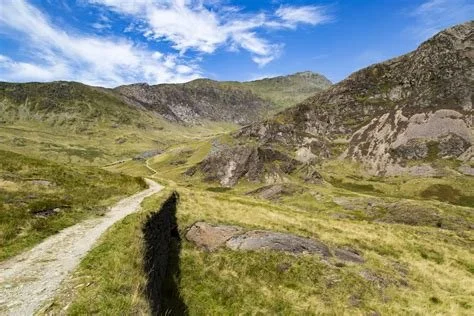
That’s an interesting question! In terms of being a shared, collectively used resources, I think you could well describe the relationship between modern Britain and its accessible land (about 11% on average between Wales and England) as that of a common and commoners. People rely on access for all kinds of things – from their living to their mental health. In the same way that the commons of old were whittled down in the name of paternalism, we are told by some quarters that people cannot be trusted to access these places, certainly not in the way that they wish to (for example, to ride a bike, to swim, or to wild camp).
And then there’s the legacy of our lost commons; the trails that today’s access is built upon are, in fact, a legacy of enclosure that recognised the public interest from that time of allowing people to travel across enclosed land in fixed lines as they had across unenclosed commons before.
There are broad principles which the public has arrived at an agreement upon; that we should do our best not to disturb one another, or those working on the land, nor should we damage nature. We should leave a place better than we found it. These are not always abided by, by 100% of the outgoing public, but they are agreed upon.
Through our conservation work I hope we’ve shown that despite there being what seem like perverse incentives at play (it’s in a climber’s personal interests to climb everywhere all the time), through robust governance and with rules that are arrived at through evidence, we can look after the places we love and use as a shared resource.
When we look at how nature is doing on our landscapes (not well, if you’re not keeping up), I think there’s room to question whether the ways land is farmed (which is by far the main land use in England and Wales) could benefit from similar systems to safeguard its future. We could point to soil health, water retention, biodiversity population trends, as indicators that we’re not heading in the right direction. There’s plenty of evidence out there that there are more ecologically sensitive grazing regimes that could be put in place and supported. We’ve supported measures to reward farmers that make good choices for nature, but the political climate can be hostile to change when it comes to farming methods.
I don’t want to write off the contribution of recreation to the plight of nature – I really don’t. But to tackle a problem of this magnitude requires two things: a large number of people who care about solving it. You can’t have that without high quality access. Second, you need some perspective about the leading causes of the problem. And access, when it comes to drivers for nature loss, is way down the list. Our members are champions for nature. They want to see restored, wilder mountains, hills, cliffs. I’m really proud to work for and with them.
I think we can all agree that more needs to be done to protect both livestock and nature from disturbance from dogs.
What role do local communities and climbers/hillwalkers play in your conservation work, and how do you ensure that stewardship is something people actively participate in rather than just support?
Our members and broader community are the brains and the brawn behind our conservation work – it's them turning out in the rain to reprofile peat hags in the wind. It’s them abseiling down cliffs to look for invasive species or to report on nesting birds. With their support we’ve just established a wildfire ranger post in Eryri. Without our volunteers we wouldn’t be able to manage or fund the crags that we own to be the amazing shared resources that they are, to restore nature and create accessibility as we do.
Climbing, scrambling, and hiking involve forms of movement that feel instinctive, how important do you think these kinds of activities are for reconnecting people with their bodies and the natural world?
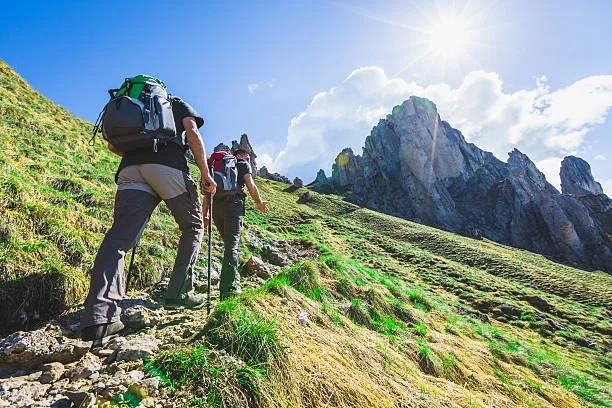
I can’t emphasize the value of fully submerging yourself in an environment enough. Whether you’re a solo hiker navigating around the Carneddau in the fog, a crack climber getting up close and personal with a deep crack in a quartzite face, a wild camper hearing the dawn chorus for the first time in your life, a sport climber taking a scary fall, safely caught by a trusted partner, these are all experiences that are good for us. They are tactile, they can be frightening. They inspire us, they can act as a catalyst for art and creativity, they challenge us. Everyone should have the option to access experiences like these, and society at large benefits tremendously from that.
What benefits (physical, mental, and social) have you observed from people engaging in outdoor activities like climbing and hillwalking, particularly in community settings? What benefits have you observed from people engaging in community conservation work in regard to their mental health and connection to their local land?
For my own part, access to activities like these have formed some of the longest lasting friendships in my life – friendships that have started at opposite ends of a rope that extend to every part of life.
We’re lucky in the outdoor world to be a bastion of communal models of housing in the form of mountain club huts. Affordable accommodation in expensive places, communally owned and managed, to the benefit of all but to the profit of nobody – these huts should be studied for their longevity in an age of growing individuality.
I’ve had the pleasure of sharing a couple of panels with some of our busiest volunteers, people like Steve Charles who put tremendous time and effort into creating opportunities for people to get together and make a difference to places they love. Always, they emphasise the enormous sense of community, of wellbeing, and of fun that they get from what is actually a lot of pretty physical labour.
What are the biggest barriers preventing people from accessing outdoor spaces and activities, and what changes in the BMCs opinion (policy or cultural) are needed to overcome them?
It’s clear to us that current legislation is woefully inadequate in terms of providing the necessary access for a healthy, active, Britain. There are many barriers to participation, but the law underpins them all – a law that restricts access from many areas without good reason, that is unclear when it comes to liability associated with recreation, that was incredibly slow and expensive to put into place, which provided less access in the end.
There’s a lot to be learned about how access is managed outside of England and Wales; the way they have managed (restricted) wild camping at Loch Lomond, for example, gives a good example of how critical sites might be reasonably restricted while allowing for access elsewhere.
The law feeds into other kinds of barriers. Access being extremely geographically unequal – a post code lottery – means that certain kinds of people will grow up having never stepped foot on (or even been within a hundred miles of) access land, which means financial barriers, travel barriers, a lack of role models in the outdoors who look or sound like you. Through our work collecting stories from wild campers camping unlawfully in the hills, I’ve heard so many frightening accounts of people being confronted aggressively while doing no harm. This culture of confrontation and aggression is a major barrier to many – particularly to racialised minorities and women, who we know are treated differently to others in the outdoors.
Instead of settling for prescriptive laws that allow for these things, we should aim for laws that are easy to understand, that create opportunities for connection, for self sufficiency, and for adventure. BMC members and the broader public support a right to roam – a rules-based system with restrictions to protect working farmland, nature, and private property.
We could begin by expanding the CRoW act to include more landscapes, by opening up access land to more activities, such as wild camping or swimming. But ultimately, new legislation is probably required to create the access future we all deserve, and that society badly needs.
Another issue is land ownership – for quite some time the BMC has owned and managed land for the benefit of climbers, in cases where other ownership might have restricted access. Currently, owning land is the most obvious way to safeguard access for the future. It’s expensive work, and we are a non-profit that relies on member fees and occasional donations, so it’s difficult to apply this at scale. For the crags we do own, we’ve been designating our owned crags as open access land to protect access in perpetuity. Land ownership in the UK is ]concentrated in the hands of very few people – this is probably a significant factor in sustaining some of the major barriers to accessing land, and nature.
Finally – outdoor education should be universal, and the countryside code should be updated drastically. We’ve lobbied for legislation to provide children with a statutory right to residential outdoor education. This would be transformational for so many children. The bill narrowly failed in Wales for the time being, but a bill inspired by it has been passed in Scotland and is progressing in England.
Do you see opportunities for outdoor spaces to become places of shared learning between generations - passing on skills, knowledge, and care for the land? And how does your work support this?
For many of us lucky enough to have experienced fantastic mentors, and benefitted from peer-to-peer learning for climbing, hillwalking, mountaineering, this is already the case and we understand the life changing influence of this.
It’s a total cliche to say you can’t care for things you don’t know, but it is indeed the case for many of us for whom the outdoors, or nature if you like, is a big part of our lives. We need more people on ‘team nature’ and outdoor activities of all stripes are an incredible vehicle for evangelism of that type.
I’ve been to sustainability in sport conference with counterparts who work in cricket or golf, who are trying to make their community care about nature, about climate. They say it’s bloody hard work. For us, with activities that have nature as our maypole, we’re tremendously lucky.
The hard part is attaining the resources to do as much for our community as they want to do for nature – organising events, volunteer days, opportunities to lobby their representatives for nature and access to it. That’s our bottleneck.
With pressures like climate change, land use, and biodiversity loss, what do you see as the most urgent priorities for protecting upland and climbing environments in the coming years? What role is the BMC playing in raising awareness and what projects of yours have been focused towards these issues?
The uplands are the front lines of climate change – they are drier, wetter, they melt faster and experience worse storms. When it comes to alpinism and the greater ranges, the retreat of our glaciers are one of our most in-your-face indicators, and climbing seasons are getting shorter and more dangerous.
Acting to stop climate change is something we are trying to do our part in – we have a climate plan. In many ways, though, we are already being confronted with drastic changes in climate and so we are looking at resilience. That can mean restoration of peat bogs that mitigate floods, or it can mean understanding how the way we need to be careful of nature is changing as they respond to new systems. I mentioned the wildfire ranger before, but we also try and inform our community as to how they can reduce their own carbon footprint, run events more sustainably, and carpool to the crag. These are all small things on the scale of planetary warming, but we are trying to help our community do their part.
If you were to reimagine our relationship with land - towards something more collective, reciprocal, and rooted in care - what role do you think organisations like the BMC play in building that future?
From the way I’ve seen our members rise to the challenges of the 21st century I can say that when you provide people with the opportunity to do good things and contribute to shared resources, they will overwhelmingly do so. I don’t think that as a society we do that enough – there's plenty of evidence out there that when you create an atmosphere of mistrust and unwelcome, people will respond in kind.
There is a lot of mistrust between the public and landowners, in both directions. In some cases there are good reasons for that. What I’m interested, less than in apportioning blame, is in breaking that tit-for-tat cycle. The BMC was established over 80 years ago to make the case for public access to the outdoors, and to maintain that relationship with the environment as a positive and enriching one. The need for an organisation to play that role hasn’t changed, and it's what we will continue to do, and hope that others join us.
The BMC's official set of values conveniently form an acronym ‘CARE’ -- its cheesy but it accurately describes what we set out to do, the vision we work for as staff, members, volunteers; community, adventure, respect, and the environment. I feel very lucky to have advocating for those as part of my actual job brief.