
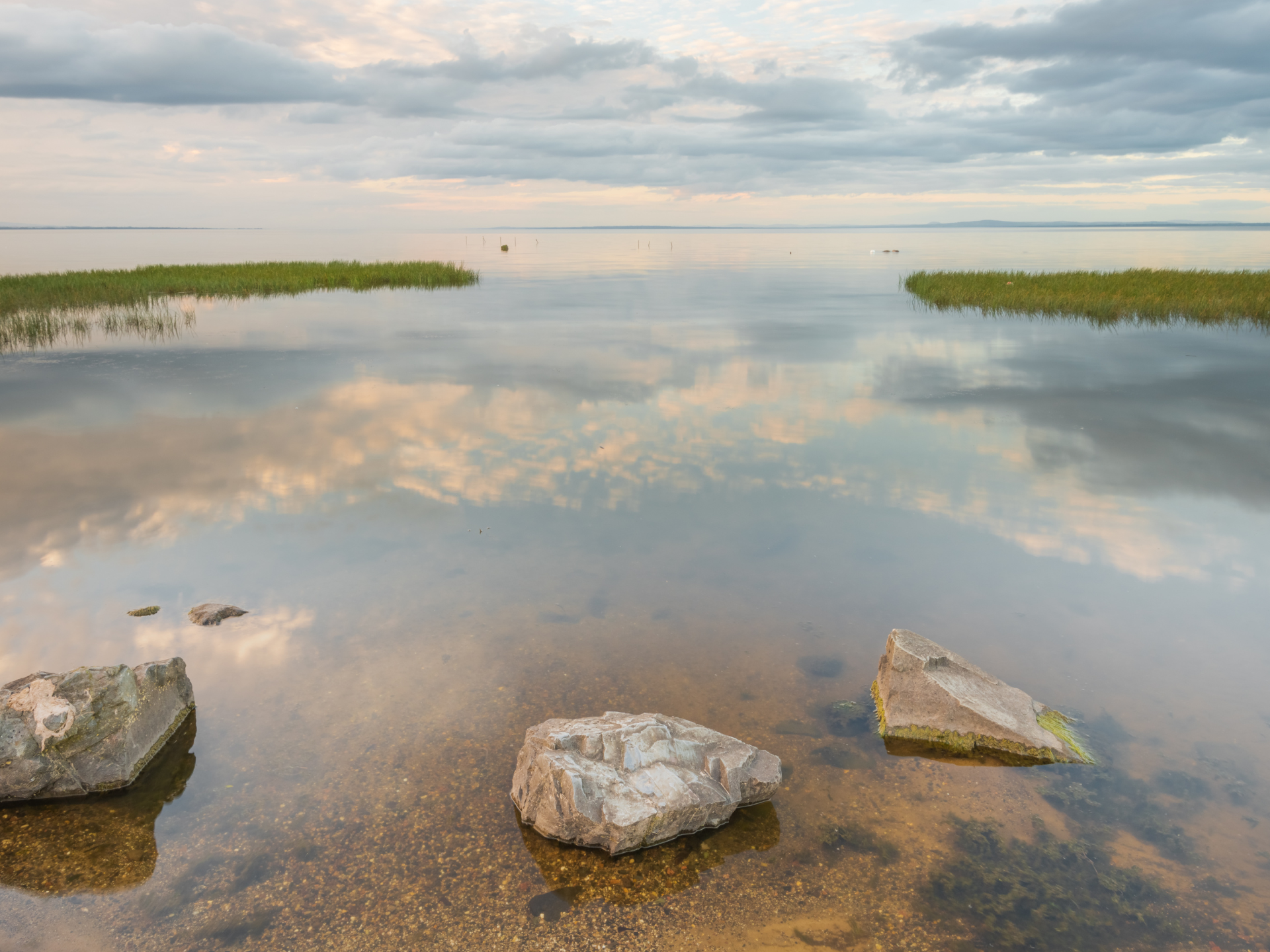
Lough Neagh
Lough Neagh is the largest body of fresh water found in the Anglo-Celtic Isles. With five of the six counties in the north of Ireland having shores on the Lough, its catchment area covers 43% of the north of Ireland, and provides just over 40% of drinking water to the north; it's a critical national and international resource. It is also a place deeply embedded in Irish cultural memory and mythology. In folklore, its creation is most often linked to the giant Fionn mac Cumhaill. Culturally, Lough Neagh has long been a site of gathering and exchange, a natural meeting point between communities.
The Lough and its wetlands are recognised as one of Europe’s most important habitats, it's a relatively shallow body of water supporting beds of submerged aquatic vegetation fringed by associated species-rich damp grassland, reedbeds, islands, fens, marginal swampy woodland and farmed pasture. Over forty rare or local vascular plants have been recorded, as well as a large number of rare or local invertebrates. Of the rare beetles recorded, two have their only known Irish location around the Lough. Large numbers of waterfowl migrate to winter on the Lough, and in the summer, Lough Neagh becomes a crucial breeding ground for many bird species.
The Lough is managed by Lough Neagh Partnership LTD, a collective of stakeholders, locals and rangers, with no legislative power. Ownership of the Lough bed and soil, along with exclusive rights to hunting and fishing activities, are in the hands of the Earl of Shaftesbury, after centuries of being handed down through aristocracy. The Lough and the people local to it - most notably fishermen - have had their rights continually stripped away by the authorities.
The Lough is facing a severe ecological crisis driven by long-term pollution and environmental mismanagement. The primary cause is nutrient enrichment, particularly phosphorus, entering the Lough from surrounding farmland. Runoff from animal slurry and fertilisers, alongside wastewater discharge, has created a “hypertrophic” system. This nutrient overload has led to increasingly frequent and intense algal blooms, particularly toxic blue-green algae. These blooms thrive in warm, nutrient-rich, and still waters, forming a thick surface that blocks light, deplete oxygen, and releases harmful toxins.
Activism around Lough Neagh has grown steadily over decades, but has intensified sharply in recent years as the scale of ecological collapse has become impossible to ignore. Grassroots organising has surged, with groups like Save Lough Neagh helping to raise public awareness, mobilise communities, and push for systemic change, including calls for the Lough to be brought into public or community ownership.
Want to join the campaign?
Sign up here and we’ll reach out to bring you on board!